
Reducing congestion and crashes in work zones
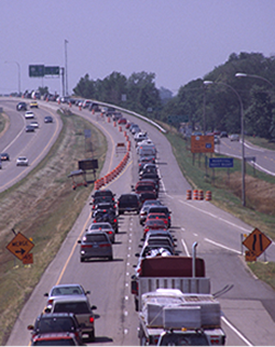
When a lane is closed in a construction zone, drivers create a zipper merge by using both lanes of traffic until reaching the defined merge area and then alternate in "zipper" fashion into the open lane.
Why the zipper merge works
When most drivers see the first “lane closed ahead” sign in a work zone, they slow too quickly and move to the lane that will continue through the construction area. This behavior can lead to unexpected and dangerous lane switching, serious crashes and road rage. A zipper merge decreases those dangers when motorists use both lanes until reaching the defined merge area and then alternate in "zipper" fashion into the open lane.
How the zipper merge works
As you see the “lane closed ahead” sign and traffic backing up, continue to use both lanes of the highway until the point of merge. Then take turns with other drivers to safely and smoothly ease into the open lane. Don't worry about being "Minnesota nice." When traffic is heavy and slow, it is much safer for drivers to remain in their current lane until the point where traffic can orderly take turns merging. When traffic is moving at highway speeds and there are no backups, it makes sense to move to the open lane sooner. The bottom line is to merge when it is safe to do so.
Benefits of the zipper merge
- Reduces the overall length of traffic backup by as much as 40 percent
- Reduces congestion on freeway interchanges
- Reduces differences in speeds between two lanes
- Creates a sense of fairness and equity that all lanes are moving at the same rate