
Know before you go: check 511mn.org
Current impacts
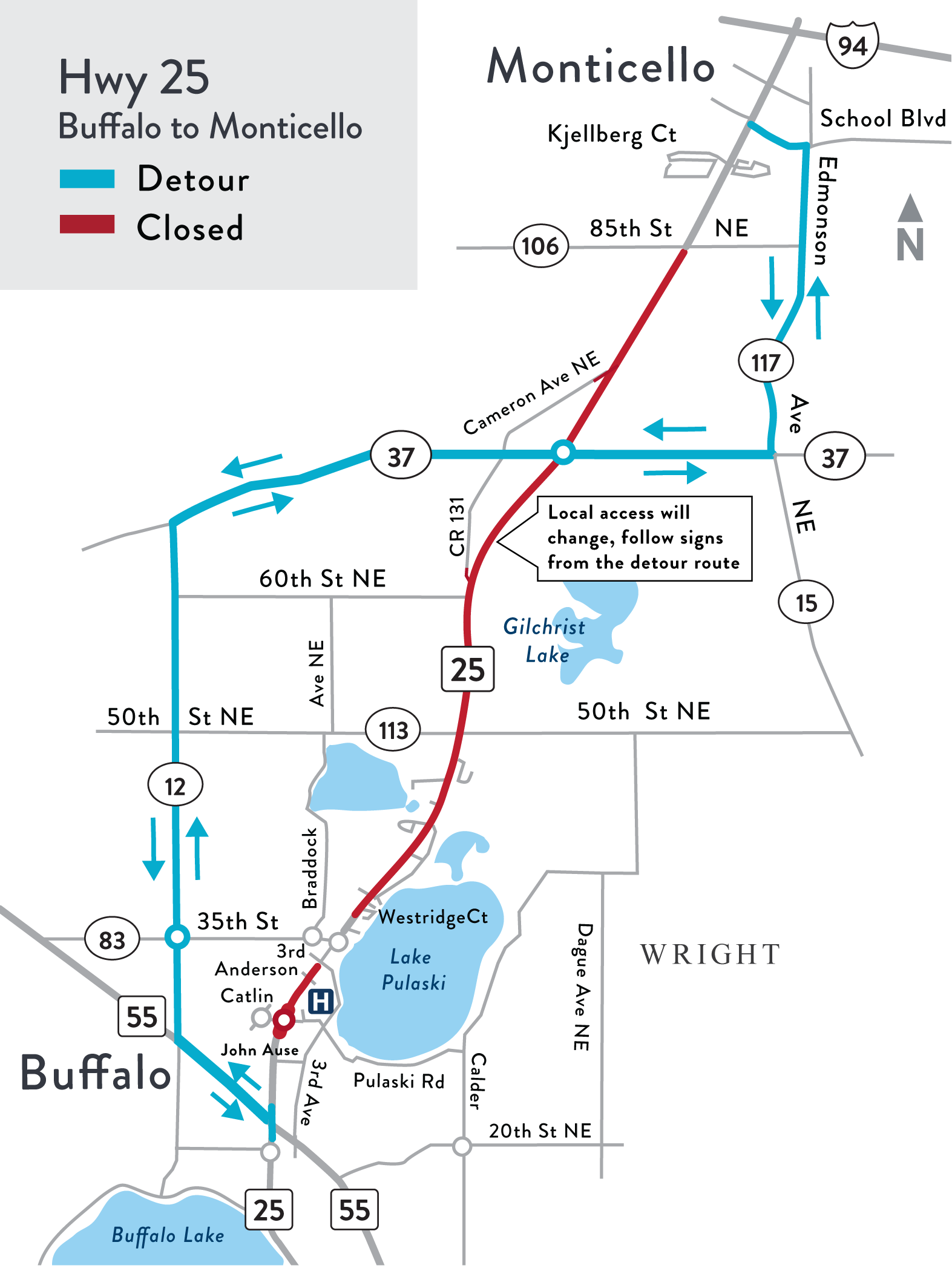
Hwy 25 through traffic until late October
Road closed John Ause Memorial Dr. to Co. Rd. 106
- Detour June 2 - late October: Hwy 55 at Buffalo, Wright Co. Rd. 12, Co. Rd. 37 through the new roundabout, Co. Rd. 117 (Edmonson Ave. NE) and School Blvd. in Monticello (PNG)
- Project email update (5/28)
- News release (5/28)

Hwy 25 between John Ause Memorial Dr. and Co. Rd. 106
Access will be maintained and open to those who live, work or visit those within the closed work zone; however, hard closures will be necessary at times to work under the road, reconstruct entrances and construct roundabouts.
Tips
- Enter/exit nearest your destination, use alternate entrances or side streets
- Allow for extra time in case of delays
- Share with visitors what the best route is to take before they head out
- Watch for sudden stops and flaggers controlling one-way traffic
- Expect gravel or grooved road surfaces, no shoulders
- Visit 511mn.org to see current travel speeds and impacts
- Sign up for project email updates
- Bookmark this web page
- Hospital/ER access in Buffalo: Will be open and maintained using side streets from Hwy 55, Hwy 25 and Co. Rd. 83 (35th St.), follow blue "H" hospital signs along the detour route. The contractor will work with emergency services.
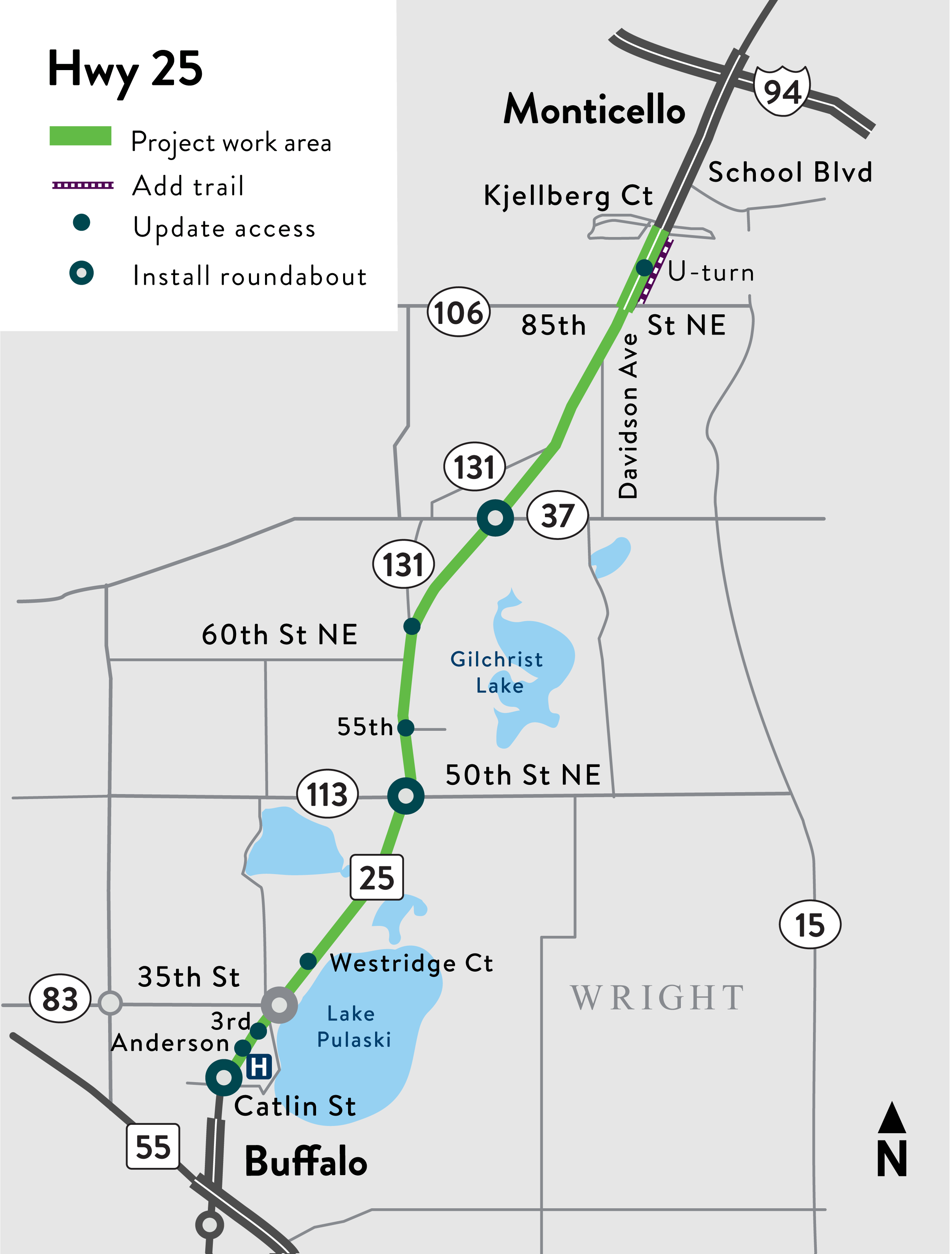
MnDOT will improve Hwy 25 from Catlin St. in Buffalo to Kjellberg Ct. in south Monticello, Wright County.
Summary of work
- Reconstruct the road surface (SFDR) from Catlin St. to north of Davidson Ave., includes shoulders and turn lanes
- Replace or repair pipes and improve ditch drainage
- Improve to/from access on Hwy 25 at:
- South of Kjellberg Ct. - add U-turn and extend shoulder called a 'loon'
- South junction Wright Co. Rd. 131 - add left turn lane
- 55th St. NE - add left turn lane
- Westridge Ct. - add right and left turn lane
- Co. Rd. 41 (Lake Pulaski Dr.) - add right turn lane
- 3rd Ave. - reconstruct
- Anderson Ave. - reconstruct
- Construct a roundabout at Hwy 25 and Co. Rd. 37
- Construct a roundabout at Catlin St. in Buffalo
- Wright County to construct a roundabout at Hwy 25 and Co. Rd. 113 from July to late fall 2026
- Install pedestrian access improvements, includes trail and all new roundabouts
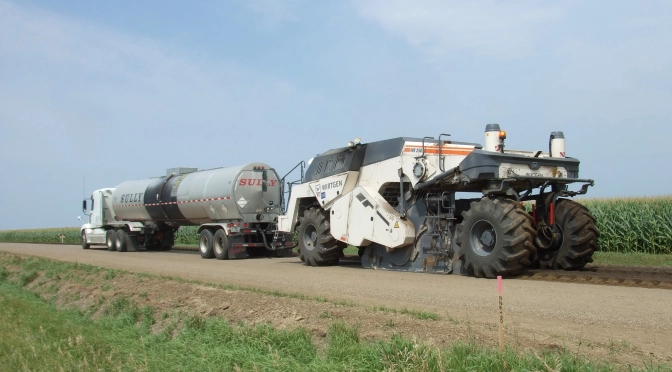
This project will rebuild and recycle the existing road surface using a process called Stabilized Full Depth Reclamation (SFDR).
How it works
- Break it down: Machines grind up the old asphalt and some of the gravel underneath.
- Strengthen it: Special materials like cement or asphalt emulsion are mixed in to make the recycled base stronger.
- Pack it tight: The new mix is compacted to form a solid, durable foundation for the road.
- Resurface: A new layer of asphalt is paved over the surface.
Benefits
This process saves money, protects the environment by reducing waste and truck traffic, and creates stronger, more durable roads by reusing the existing surface.