
Brochures
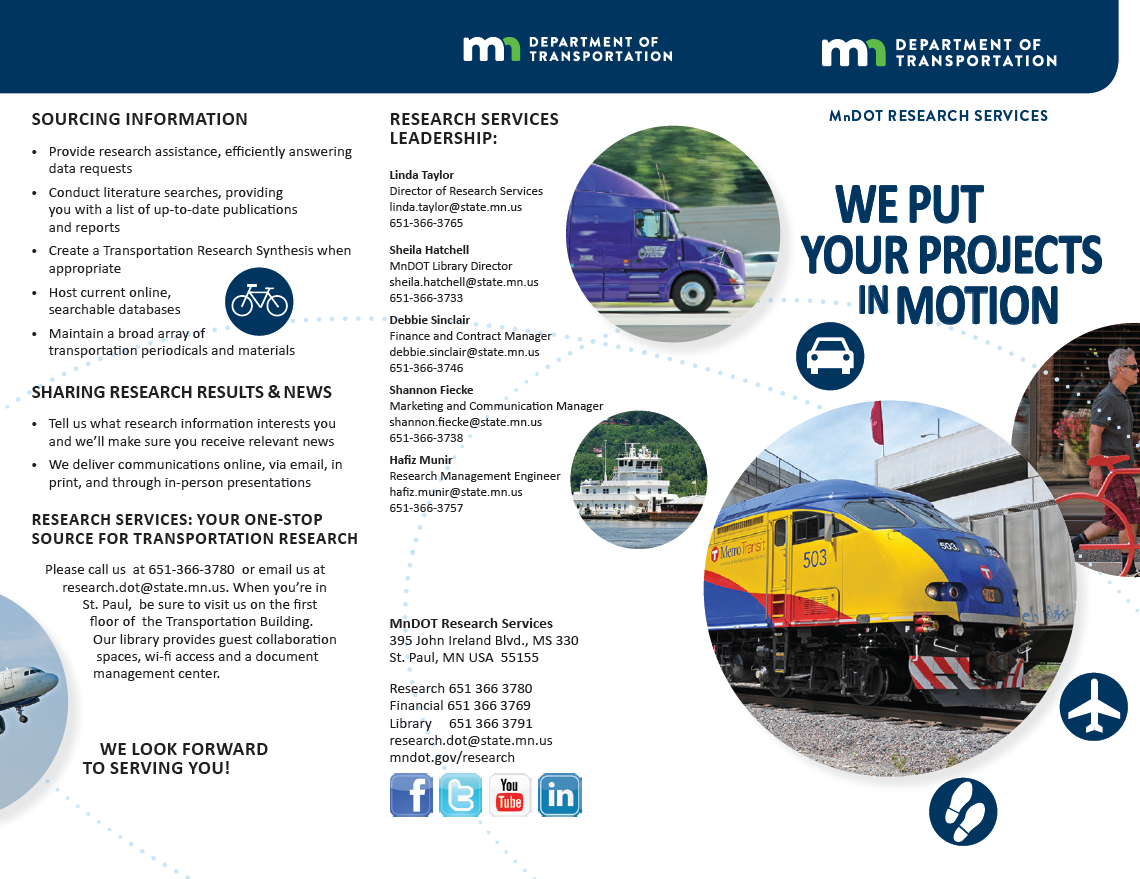
Office of Research & Innovation: We Put Your Ideas in Motion
Brochure: We Put Your Ideas in Motion
(PDF, 2 pages, 3.72 MB)
The MnDOT Office of Research & Innovation helps solve transportation problems by administering research projects for MnDOT and the Local Road Research Board.
This brochure describes our four different areas of service and the many types of services that we provide.
Local Road Research Board (LRRB)
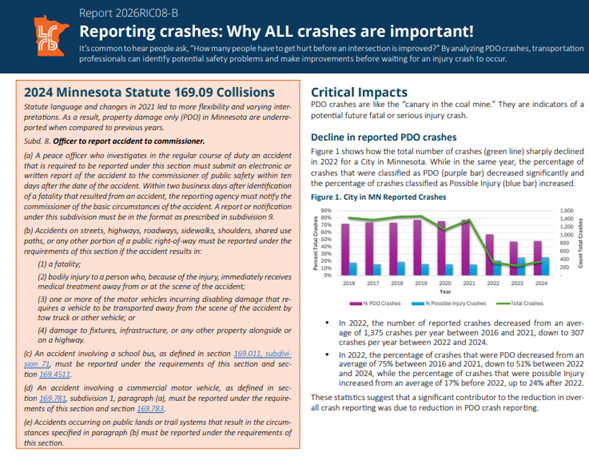
Reporting crashes: Why ALL crashes are important!
Brochure (PDF, 4 pages)
Videos:
- The Canary in the Coal Mine: Why All Crashes Matter
- Crash Reporting: Special Podcast Episode | Law Enforcement and Engineer Perspectives
How About a Roundabout?: The Minnesota Experience and a Minnesota Guide
Brochure: How About A Roundabout
(PDF, 2 pages, 388 KB)
A modern roundabout is a circular intersection where traffic flows around a center island. Today, roundabouts can be alternatives to traffic signals and stop signs to control traffic. In many cases, they have several advantages over signals and stop signs, including:
- Fewer injury crashes and fatalities
- Increased pedestrian safety
- Less vehicle delay and pollution
Roundabouts, like all intersections, undergo thorough analysis prior to implementation to determine if it is the appropriate solution. MnDOT has more information concerning roundabouts located on their Roundabouts page.
To Pave or Not to Pave?: Making Informed Decisions on When to Upgrade a Gravel Road
Brochure: To Pave or Not to Pave?
(PDF, 4 pages, 602 KB)
Video: To Pave or Not to Pave? Making informed decisions on when to upgrade a gravel road
Two key questions must be answered when developing a gravel road maintenance plan:
- What is the best way to maintain a gravel road?
- When should the roadway be upgraded to a paved surface?
These are not easy questions because many factors affect the answers. This brochure and video highlight two recent reports that can be used to help decide when to upgrade a gravel road.
Use of Foamed Asphalt with Cold-in-Place Recycling and Full Depth Reclamation
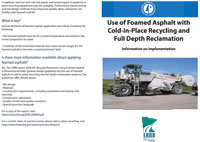
Brochure: Use of Foamed Asphalt
(PDF, 2 pages, 155 KB)
Until the mid-1990s, almost all cold-in-place recycling involved the use of emulsions. In recent years, countries and states began to turn instead to foamed or expanded asphalt. Effective with cold-in-place recycling and full depth reclamation methods, foamed asphalt helps add strength and moisture resistance to the remaining pavement materials.
Making the Most of Your Pavement Dollars
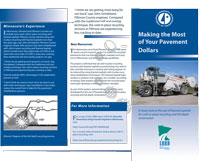
Brochure: Making the Most of Your Pavement Dollars
(PDF, 2 pages, 151 KB)
The Minnesota Local Road Research Board sponsored a recent research project to assess the recycled pavements that use foamed asphalt, evaluate such projects in Minnesota and develop design guidelines. The project confirmed that all cold-in-place recycling sections with foamed asphalt are performing very well to date and that transverse cracking and rutting appears to be reduced by the use of foamed asphalt cold-in-place recycling rehabilitation techniques.